
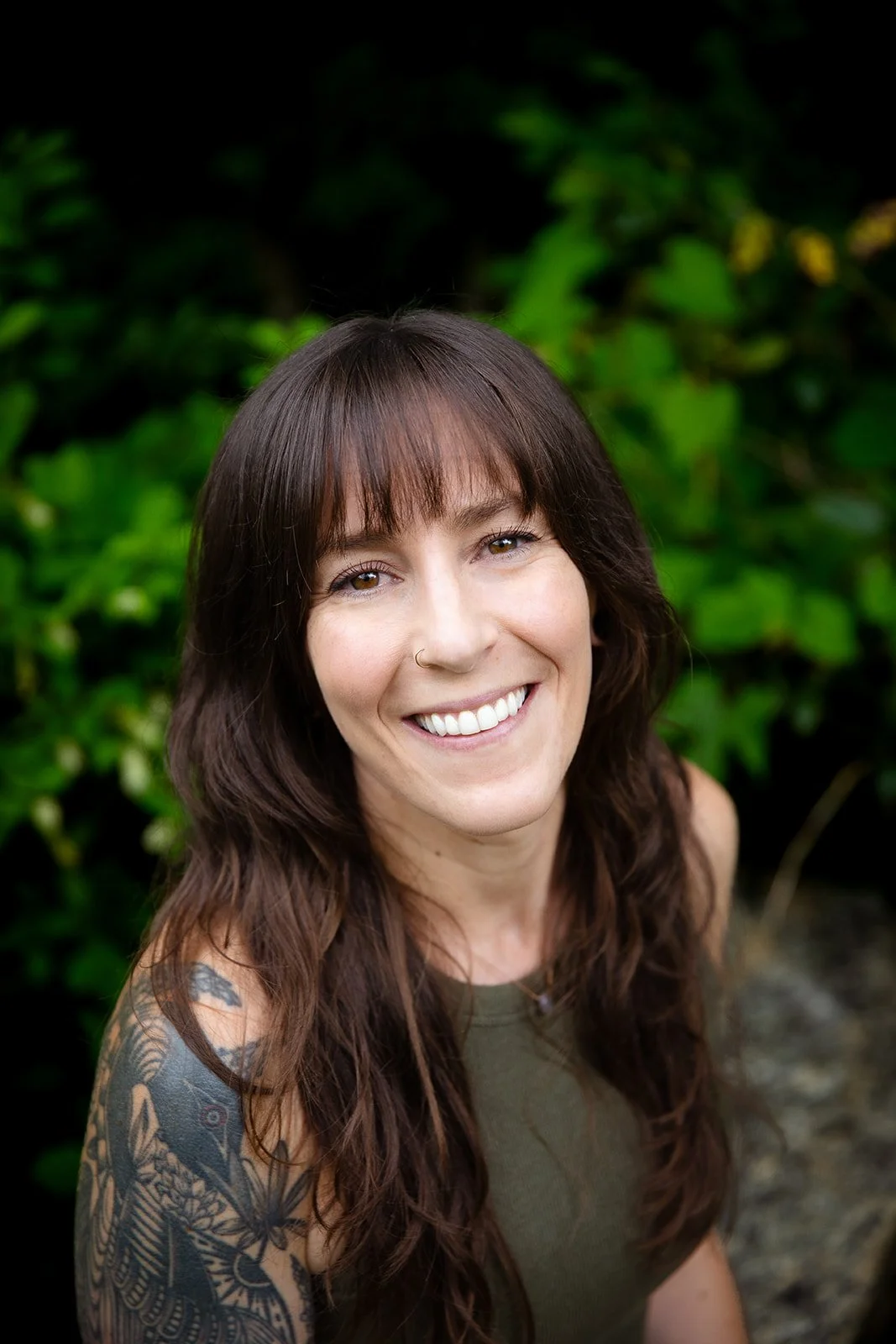
meet andrea
individual counseling //online and in-person therapy in asheville and across north carolina. offering daytime and evening hours
chances are you’ve come across a lot of different ‘types of therapy’ in your search for a therapist. there are a lot of options out there - but the reality is, most of these modalities work in different ways towards the same goal: to help you come back to yourself.
i work with folks who are feeling disconnected from their own inner wisdom, and are finding it difficult to trust themselves and their their judgment, choices, or feelings. this often shows up as crowdsourcing decision making or feeling lost without the guidance of family, friends, or an overly structured life. trauma, self-criticism, or the pressure of external expectations can make it hard for us to know what “the next right thing” is. through a combination of talk therapy, body-based (somatic) therapy, and a big dose of compassion and humor, i offer a space for my clients to explore their thoughts and feelings without judgment as you find your way back to yourself.
disordered eating (body trust framework)
i’ve been amazed time and again by how our relationship to our bodies impacts other relationships we have - partnerships, friends, family, work, food. in my work as an eating disorder specialist, i know that trauma, anxiety, depression, and the way we feel about our bodies are often all swimming in the same pool. the self-criticism, hyperfixation, and deprivation of nourishment becomes all too consuming, leaving us living in the confusing paradox of being disconnected - yet hyperaware - of how we see and relate to our bodies.
i am in awe of the power and courage it takes to end the cycle of ignoring our own bodies and our innate need for nourishment. i help folks move towards neutrality and acceptance of food and of their bodies, even when - especially when - it’s really terrifying to do so.
my work with folks is rooted in the frameworks of Body Trust and Health At Every Size (HAES). these are strength-based, trauma-centered, and scientifically grounded healing modalities.
(read my blog about unexpected signs of disordered eating here.)
brainspotting
brainspotting is an evidence-based, body-based modality that serves as a first line of defense in processing both single event trauma (ex: a car accident, hurricane or natural disaster, or witnessing a traumatic event) and chronic/multiple traumas (ex: long term exposure to abuse, complex grief/loss, chronic illness/medical trauma). brainspotting can be used to effectively treat ptsd, anxiety, depression, imposter syndrome, and in some cases, physical pain.
i also provide adjunct brainspotting to clients who already work with a primary therapist.
there are questions that don’t always have quick answers, but they point to something important underneath them. the kind of questions that show up when you’re trying to understand yourself more clearly, feel better in your life, or change patterns that feel hard to shift. these are some of the questions my clients ask:
-
self-trust is rebuilt one small decision at a time. if you've spent years doubting yourself, looking to others for reassurance, or questioning your instincts, it can take time to rebuild confidence. trust grows when your actions begin to align with your values and when you learn that you can handle the outcomes of your choices.
-
when you're afraid of making a mistake, every decision can feel overwhelming. many people who struggle with self-doubt have learned to prioritize being "right" over trusting themselves. therapy can help you build confidence in your own judgment and tolerate the uncertainty that comes with making choices.
-
self-criticism is often something we learn. for some people, it developed as a way to stay motivated, avoid rejection, or protect themselves from disappointment. while it may have served a purpose at one point, it can also become exhausting. therapy can help you develop a more balanced and compassionate relationship with yourself.
-
disordered eating can show up in many ways and doesn't always look the way people expect. it may include rigid food rules, guilt around eating, obsessive thoughts about food or weight, frequent dieting, cycles of restriction and overeating, or feeling out of control with food. if food, weight, or body image are taking up a significant amount of mental space, it's worth exploring further.
-
sometimes disconnection develops as a way of coping with stress, shame, difficult experiences, or years of focusing on how your body looks instead of how it feels. if you've learned to ignore your body's signals, needs, or emotions, reconnecting can feel unfamiliar. therapy can help you build a more trusting relationship with your body.
-
most people don't stop caring entirely, and that's okay. we're wired for connection. the goal is often learning how to value your own opinions, needs, and choices as much as you value other people's. over time, it becomes easier to make decisions based on what feels right for you rather than what will earn approval.
-
when your sense of worth becomes tied to achievement, productivity, or meeting expectations, it can feel like no amount is ever enough. many people find themselves constantly chasing the next accomplishment without ever feeling satisfied. therapy can help you explore where those beliefs came from and develop a sense of worth that isn't dependent on doing more.
-
yes. therapy can help you understand the beliefs, experiences, and messages that have shaped the way you see yourself. the goal isn't necessarily to love every part of your body every day. often it's about developing a more compassionate, respectful, and sustainable relationship with yourself.
faq
-
i work best with adults who struggle with self-doubt, anxiety, perfectionism, body image concerns, disordered eating, and people-pleasing. many of my clients feel stuck in overthinking, constantly second-guess their decisions, or have difficulty trusting themselves. therapy focuses on helping you reconnect with your values, build confidence in your decisions, and develop a more compassionate relationship with yourself and your body.
-
i am in network with BCBS, Aetna, MedCost, AmBetter, United, Healthy Blue BCBS, Carolina Complete/ Wellcare Medicaid, Amerihealth Caritas, and UHC Community. I am a certified out of network provider for Tricare and can accept most Tricare plans.
private pay sessions are billed at $150 per 55 minutes
-
yes. i offer both in person and online therapy monday through friday in asheville, north carolina