
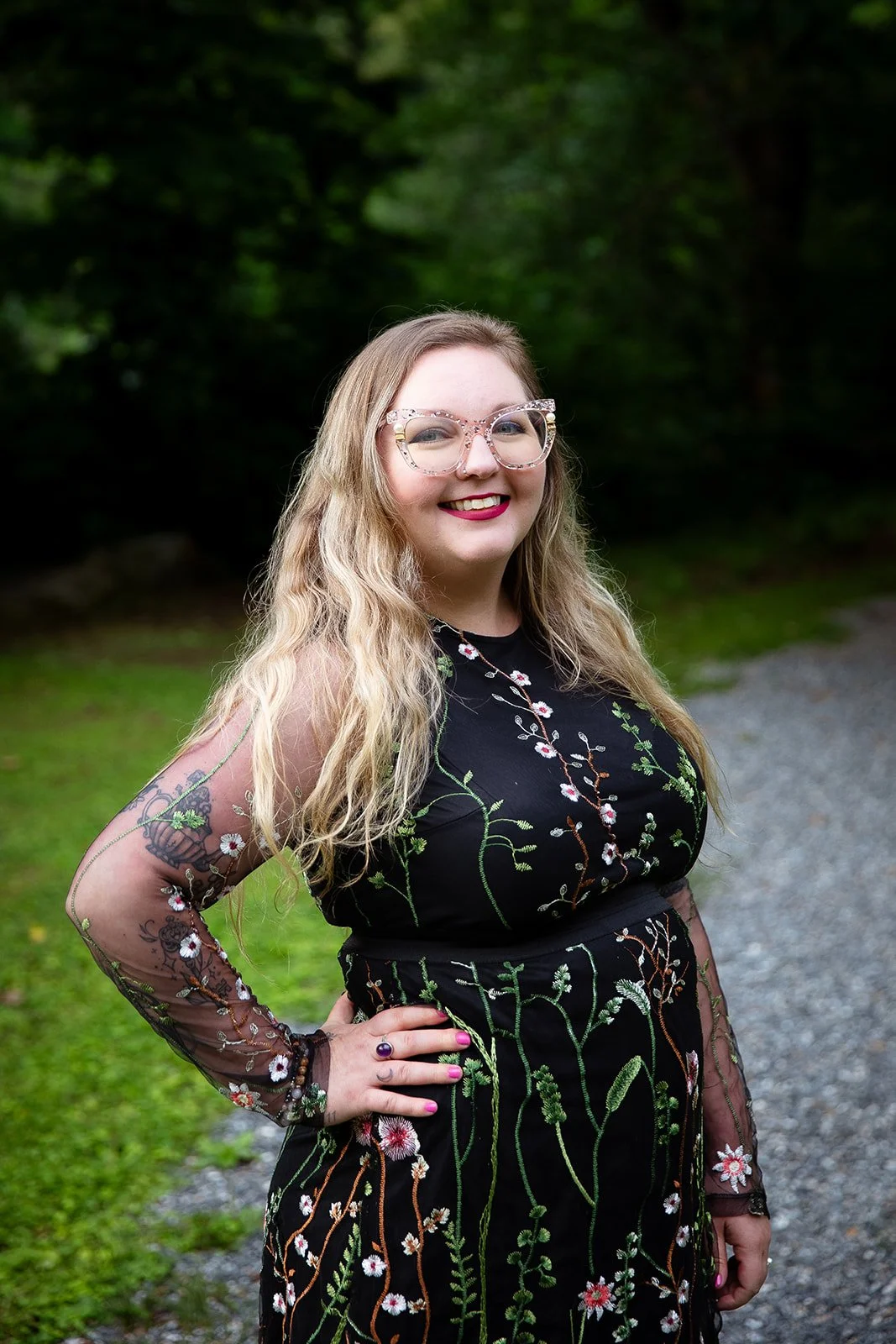
meet shelby
individual counseling //online and in-person therapy in asheville & across north carolina
i work with autistic and neurodivergent teens and adults, parents navigating complex family dynamics, and helpers who spend much of their lives caring for others.
many of my clients are trying to understand themselves more clearly. some are exploring whether autism or adhd may be part of their story. others are adjusting to parenthood, navigating foster care or adoption, supporting a neurodivergent family member, or moving through a major life transition.
therapy offers a space to slow down, make sense of what is happening, and build a life that feels more sustainable, authentic, and aligned with who you are.
neurodivergence // autism spectrum disorder // adhd
as an autistic therapist, i provide neurodiversity-affirming therapy for teens and adults across north carolina.
i work with clients who have a formal autism or adhd diagnosis, as well as those who are beginning to wonder whether neurodivergence may explain experiences they've carried for years. many of my clients struggle with burnout, masking, sensory overwhelm, social exhaustion, anxiety, identity questions, or feeling different without fully understanding why.
i have a particular interest in supporting late-identified autistic adults, especially women and gender-diverse individuals, as well as parents navigating neurodivergence within their families.
i also provide autism evaluations for teens and adults in asheville and throughout north carolina.
I also offer comprehensive testing for autism spectrum disorder in asheville nc and online in north carolina. you can learn more about that here.
therapy for teens // support during a complicated stage
the teen years can be complicated. school pressures, friendships, identity development, family relationships, and questions about the future can feel overwhelming.
i work with teens experiencing anxiety, perfectionism, self-doubt, social challenges, neurodivergence, and life transitions. together, we focus on building self-understanding, confidence, and skills that support everyday life.
support for parents, pregnancy, adoption, and foster care
parenthood can bring joy, uncertainty, grief, and enormous change, sometimes all at once.
i work with people who are pregnant, postpartum, considering parenthood, navigating infertility or pregnancy loss, pursuing adoption, fostering children, or raising neurodivergent kids. these experiences often raise questions about identity, relationships, expectations, and what it means to care for both yourself and your family.
therapy can provide space to process these transitions and develop practical, sustainable ways to move through them.
sometimes people come to therapy with a diagnosis. more often, they come with questions. questions about burnout, overwhelm, masking, parenting, belonging, and whether autism might explain experiences they've never fully understood. these are some of the questions my clients ask:
-
that's actually one of the most common reasons people reach out. many of the people i work with have spent years wondering if autism fits, dismissing their experiences, or feeling like they're "not autistic enough." therapy can be a place to explore those questions without pressure to arrive at a particular answer.
-
autistic burnout can look like exhaustion, overwhelm, increased sensory sensitivity, difficulty functioning, loss of skills, irritability, shutdowns, or feeling like everyday life suddenly requires much more effort than it used to. many people assume they're lazy, depressed, or failing when they're actually burned out from trying to meet demands that exceed their capacity.
-
absolutely. autism doesn't prevent people from building meaningful careers, relationships, families, and lives. many autistic adults are incredibly capable and successful. the challenge is often learning how to build a life that works with your brain rather than constantly pushing against it.
-
yes. autism is not the same thing as disliking people or being unable to connect. many autistic people deeply value relationships and are highly empathetic. sometimes the challenge is understanding social expectations, recovering from social exhaustion, or feeling like you're performing rather than being yourself.
-
often because doing everything "right" still requires an enormous amount of effort. many people spend years pushing through sensory overwhelm, masking, overcommitting, people pleasing, or ignoring their own needs. eventually the body and nervous system start asking for a different approach.
-
you don't need to have all the answers before seeking support. whether your teen is autistic or not, understanding how their brain works can help them feel more understood, supported, and successful. we can explore what's going on together and determine what next steps make sense.
-
many people come to therapy feeling confused about why things that seem easy for others feel so difficult for them. overwhelm can come from sensory demands, executive functioning challenges, chronic stress, masking, parenting responsibilities, or simply carrying too much for too long. therapy can help us understand what's contributing to that overwhelm and what support might help.
-
therapy won't teach you how to be a perfect parent, because perfect parents don't exist. what it can do is help you better understand yourself, your child, your nervous system, and the patterns that show up in your family. often, when parents feel more supported and regulated themselves, parenting becomes a little less overwhelming.
-
many autistic and neurodivergent people describe feeling like they're missing a rulebook everyone else received. they often spend years wondering why things seem harder for them or why they never quite feel like they fit in. therapy can help make sense of those experiences and build a life that feels more authentic.
-
many adults don't realize how much energy they've spent trying to fit in until they start paying attention. masking can be useful at times, but it can also be exhausting. therapy can help you understand what parts of yourself you've learned to hide and what it might look like to live more authentically.
-
yes. many autistic adults—especially women, gender-diverse people, gifted individuals, and people who learned to mask early—were overlooked in childhood. not being identified earlier does not mean your experiences aren't real.
-
this is one of the questions i hear most often. many people have spent years blaming themselves for struggles that make much more sense when viewed through a neurodivergent lens. understanding why things are hard is often the first step toward finding more effective and compassionate ways to navigate life.
faq
-
i work with teens and adults who are neurodivergent or have neurodivergent family members. i also work with therapists and other helping professionals
-
i am in network with BCBS, Aetna, MedCost, AmBetter, United, Healthy Blue BCBS, Carolina Complete/ Wellcare Medicaid, Amerihealth Caritas, and UHC Community. I am a certified out of network provider for Tricare and can accept most Tricare plans.
private pay sessions are billed at $150 per 55 minutes
-
yes. i offer in person therapy on wednesdays and fridays, and provide telehealth services monday-friday.
-
yes. in fact, many people start therapy because they have more questions than answers. for some, that curiosity is about gender or sexuality. for others, it's about realizing they've spent years masking, people-pleasing, or trying to fit into expectations that never felt quite right.
you don't need to arrive with a label or a clear destination. therapy can be a place to slow down, notice what feels true for you, and explore your identity without pressure, judgment, or a timeline. many of my clients find that as they better understand themselves, they also gain clarity about the relationships, communities, and ways of living that fit them best.
-
that's actually one of the most common reasons people reach out. many of my clients have spent years feeling different, overwhelmed, misunderstood, or exhausted from trying to keep up with expectations that seem to come more naturally to other people. some are wondering about autism specifically, while others just know that something about the way they've been understanding themselves doesn't quite fit.
therapy can be a place to explore those questions without rushing toward a conclusion. if you're interested in pursuing a formal evaluation, i also offer autism assessments using the migdas-2, a collaborative and neurodiversity-affirming assessment process. whether you ultimately identify as autistic or not, gaining a deeper understanding of how your brain works can help you move through the world with more self-compassion and confidence.
-
yes. i provide letters supporting gender-affirming care, including documentation that may be required for hormone replacement therapy (hrt), gender-affirming surgeries, or other services that follow WPATH standards of care.